GearSmart
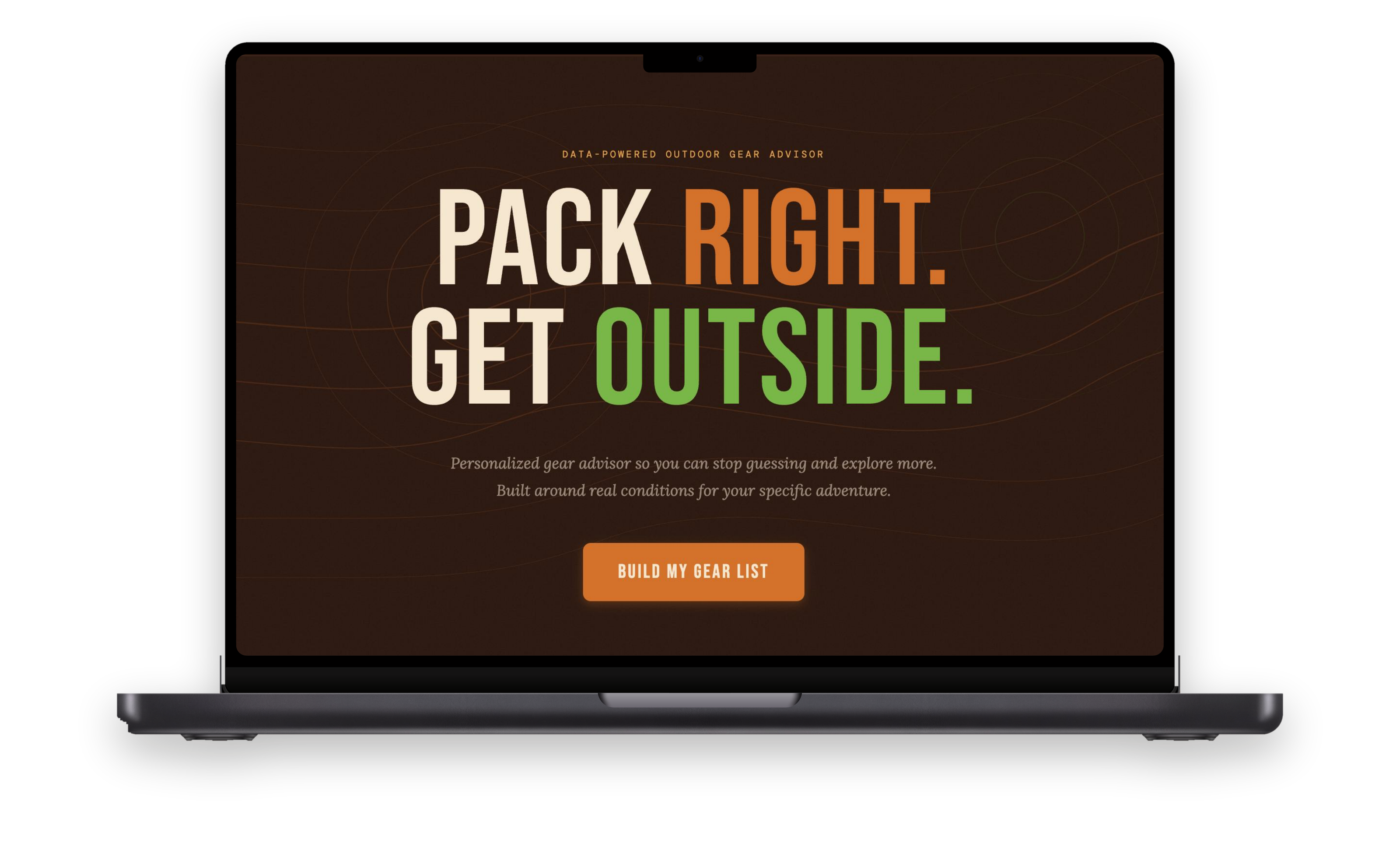
A data-powered gear advisor that tells first-time adventurers exactly what to pack — and why.
Year
2026
Duration
Spring 2026
Role
Sole designer & builder — research, product design, schema design, AI-assisted engineering
Team
Solo
The Hook
The first time I went camping, at Holcomb Valley, I hit the moment every beginner knows: not knowing what you don't know. Later, working the floor at REI and leading a women's climbing community, I kept meeting the same person — a capable beginner, underprepared, not for lack of trying, but because every gear resource was written for people who already know. GearSmart is the friend in the gear store, for the people who don't have one.
Problem
Beginners show up underprepared for three reasons: generic lists ignore the real conditions of where they're going; the cost of entry is intimidating and unranked; and there's endless gear content but almost none specific to their actual trip. The result is overbuying, underbuying, or giving up.
What I Built
You give GearSmart your trip — destination, dates, activity, experience level, budget — and it generates a checklist built for that trip: every item carries a plain-language reason, flagged Essential or Recommended, grounded in live weather and conditions, and linked to whichever trusted retailer sells it cheapest. A companion AR feature then coaches you through fitting your pack correctly once it's on the list.
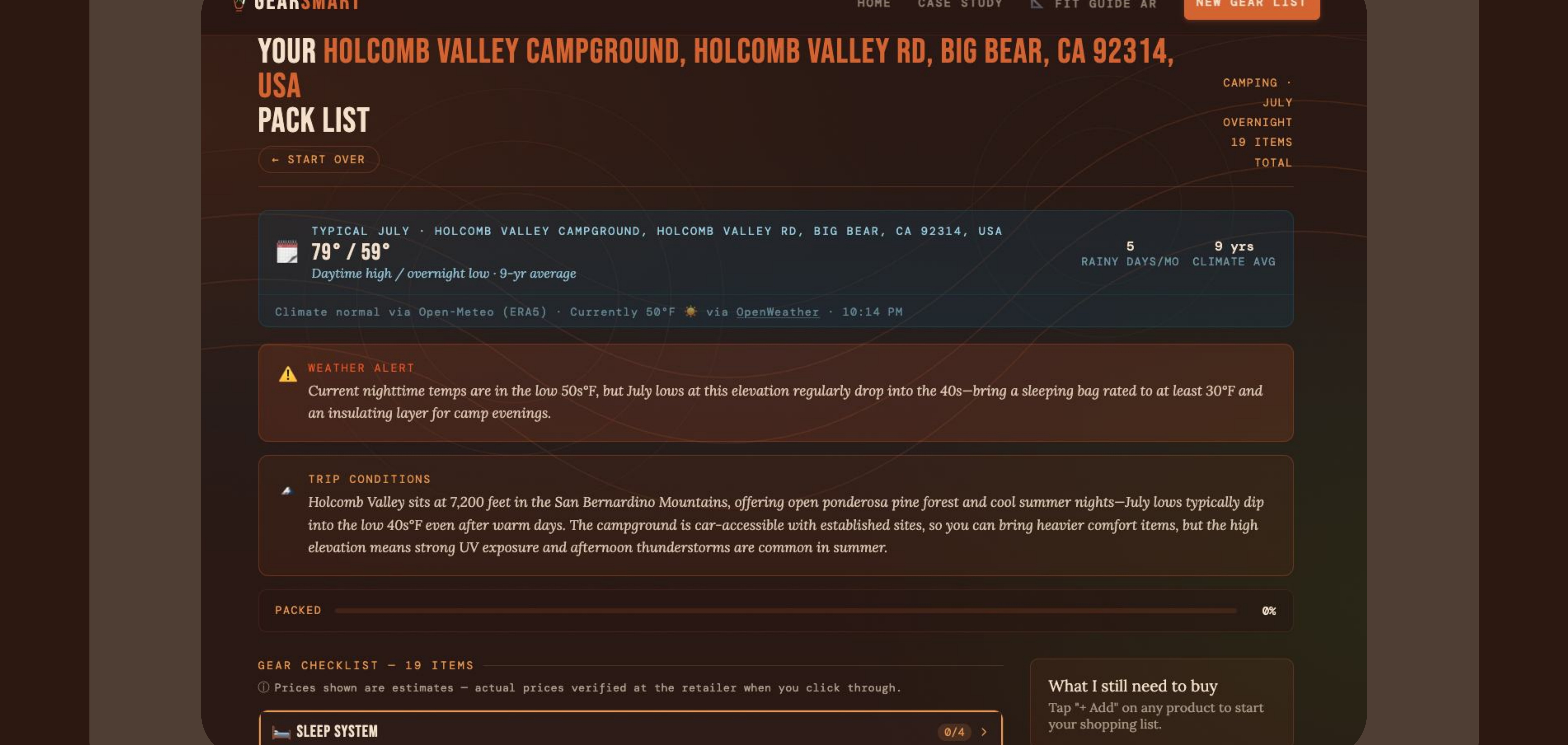
Tap to buy and GearSmart routes you to whichever trusted retailer sells it cheapest.
Process
Research with real beginners. I ran a session with the Ladies Climbing Coalition — real first-timers, not classmates — using an REI roleplay and an affinity board. Three themes surfaced:
Key Insight
"I had no idea desert nights were freezing — I showed up with one layer."
Condition Gaps. Lists must surface hidden, counterintuitive conditions, not just gear categories.
Key Insight
"I wished someone gave me a list specific to where I was actually going, not just hiking in general."
Specificity Gap. Built around the exact trip — terrain, season, duration — not a generic archetype.
Key Insight
"I didn't know what was actually essential vs. nice to have. Everything looked equally important."
Priority Blindness. A clear safe-vs-upgrade signal so beginners know where to spend first.
The deeper finding: every target user over-rated their own skill on exactly the trip where it mattered most. The real problem wasn't gear — it was calibration.
Four versions, and a rebuild. V1 worked but leaked API keys and broke on bad data. I moved every secret server-side, replaced fragile parsing with the AI's structured tool-use, added retries and spending caps — shipping to real users meant making it not-broken.
The pivot that defines it. I applied to REI's affiliate program; they rejected it. So I rebuilt the entire purchase layer to be retailer-agnostic — searching trusted retailers and routing to whoever's cheapest. The rejection made the product better.
What I removed. The strongest decisions were walk-backs — designed, tested, and pulled because simpler served the user better:
- Per-person pricing. Built it, tested it, removed it — splitting cost across people obscured the per-item decision the user actually needed to make.
- Hover tooltips. Designed for desktop power users, but the real flow was mobile and one-handed. Tooltips became a tap target nobody wanted.
- Solo-mode toggle. Solved a problem most users didn't have, at the cost of an extra decision every user did have to make.
Designing in AR. The first time I tested the AR fit guide on a real pack, I learned an overlay can show you the target but can't confirm you've hit it — so v2 tracks the body, not the gear. The physical test taught me what the screen couldn't.
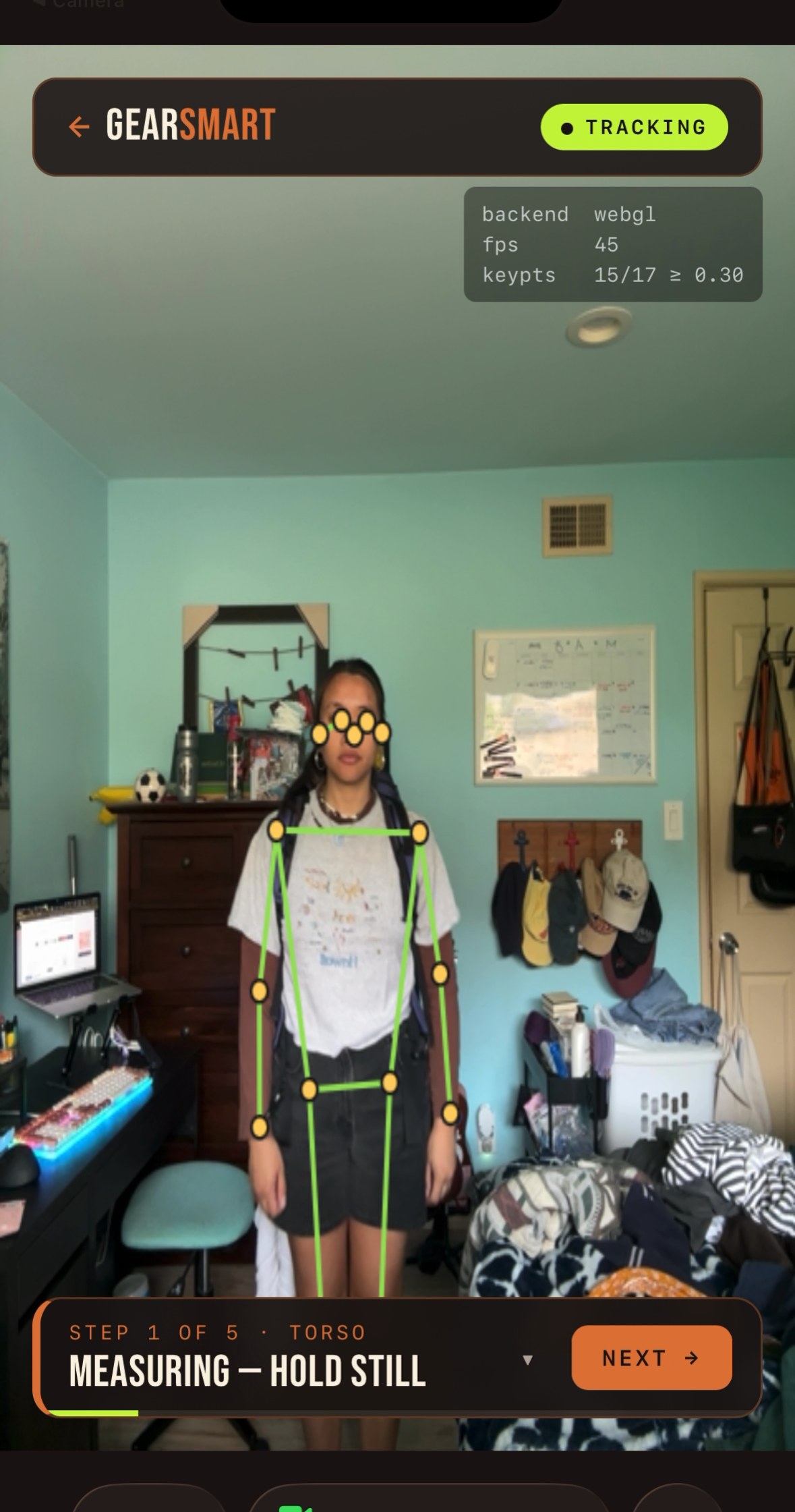
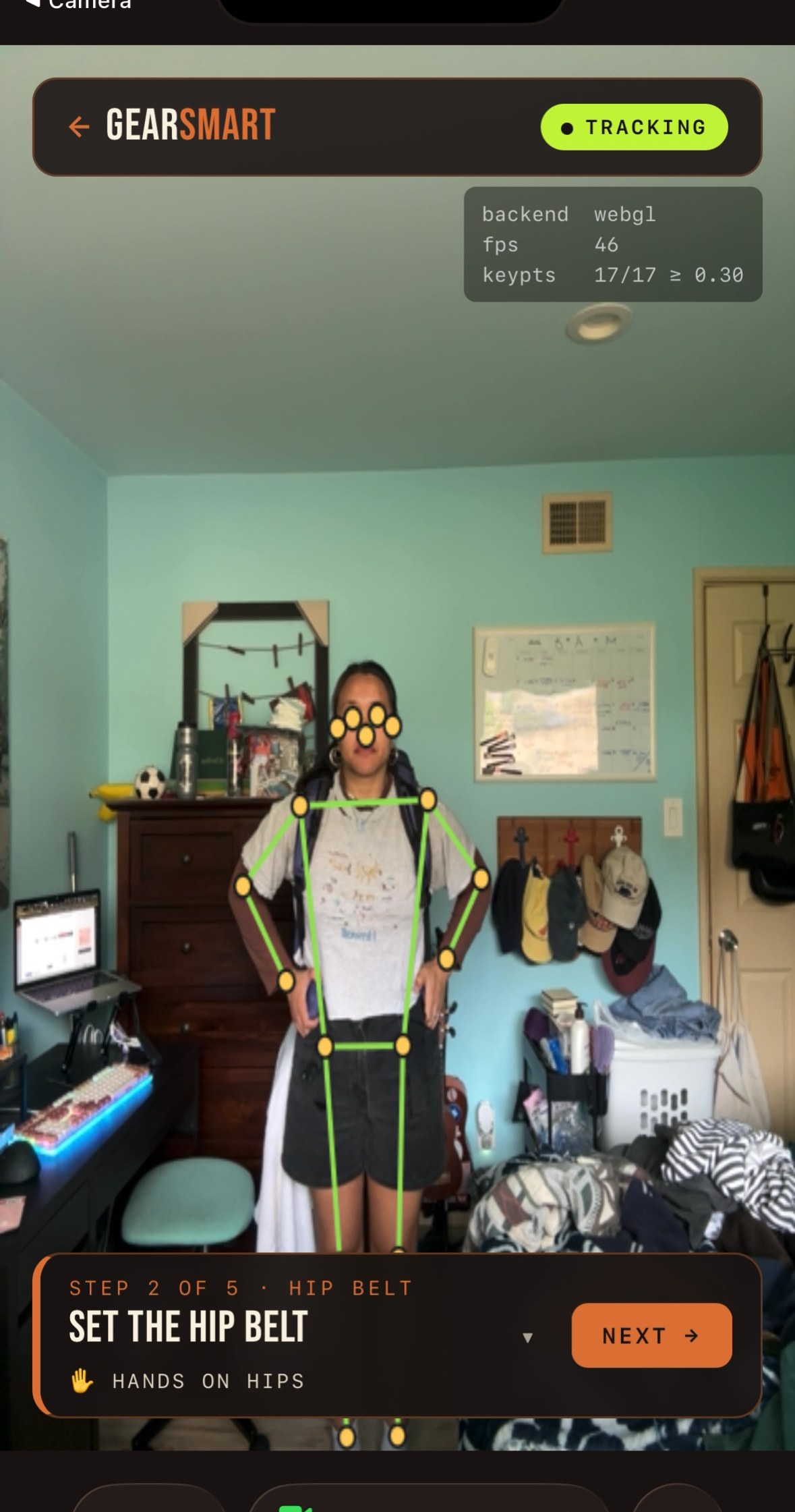
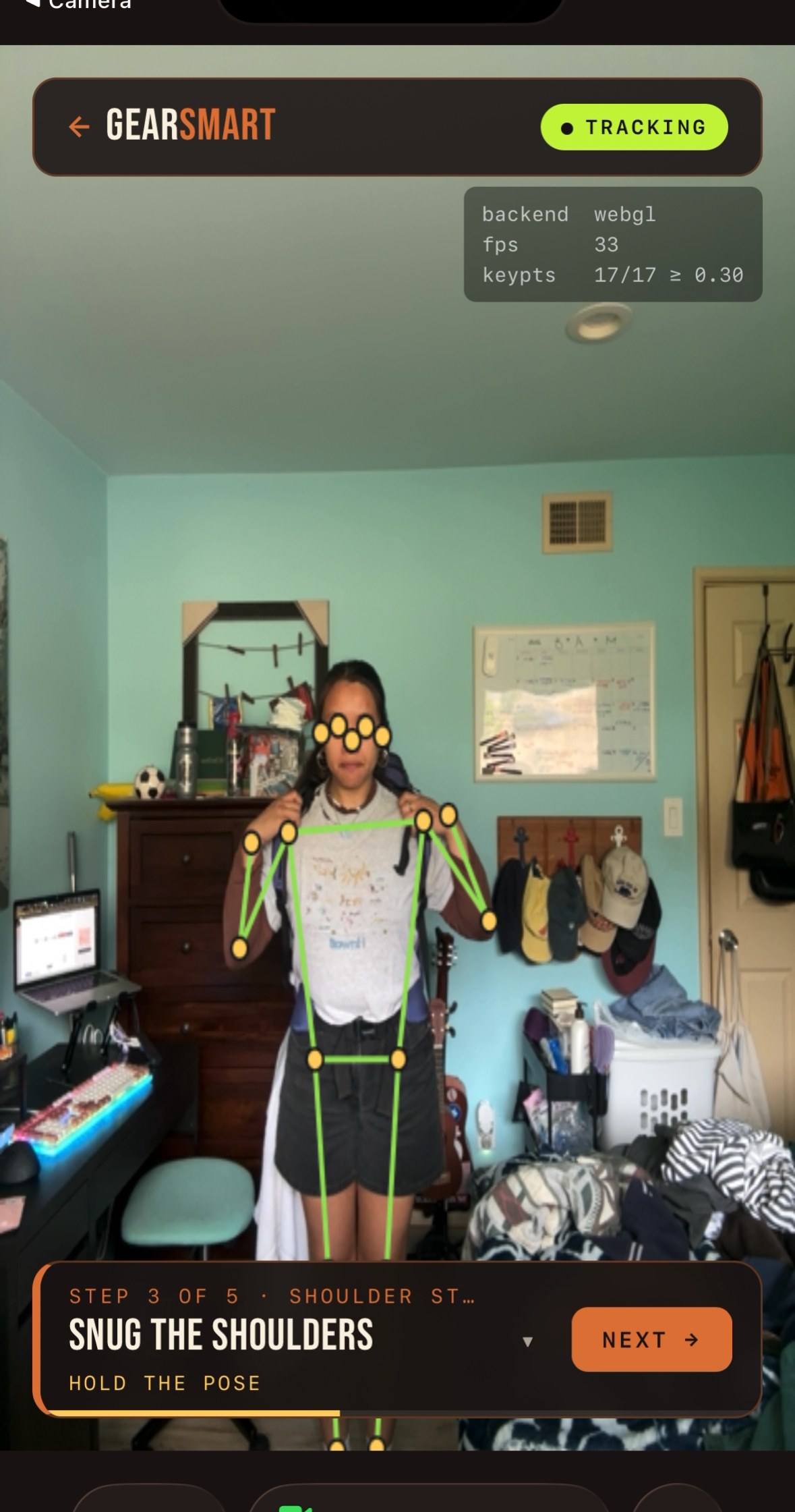
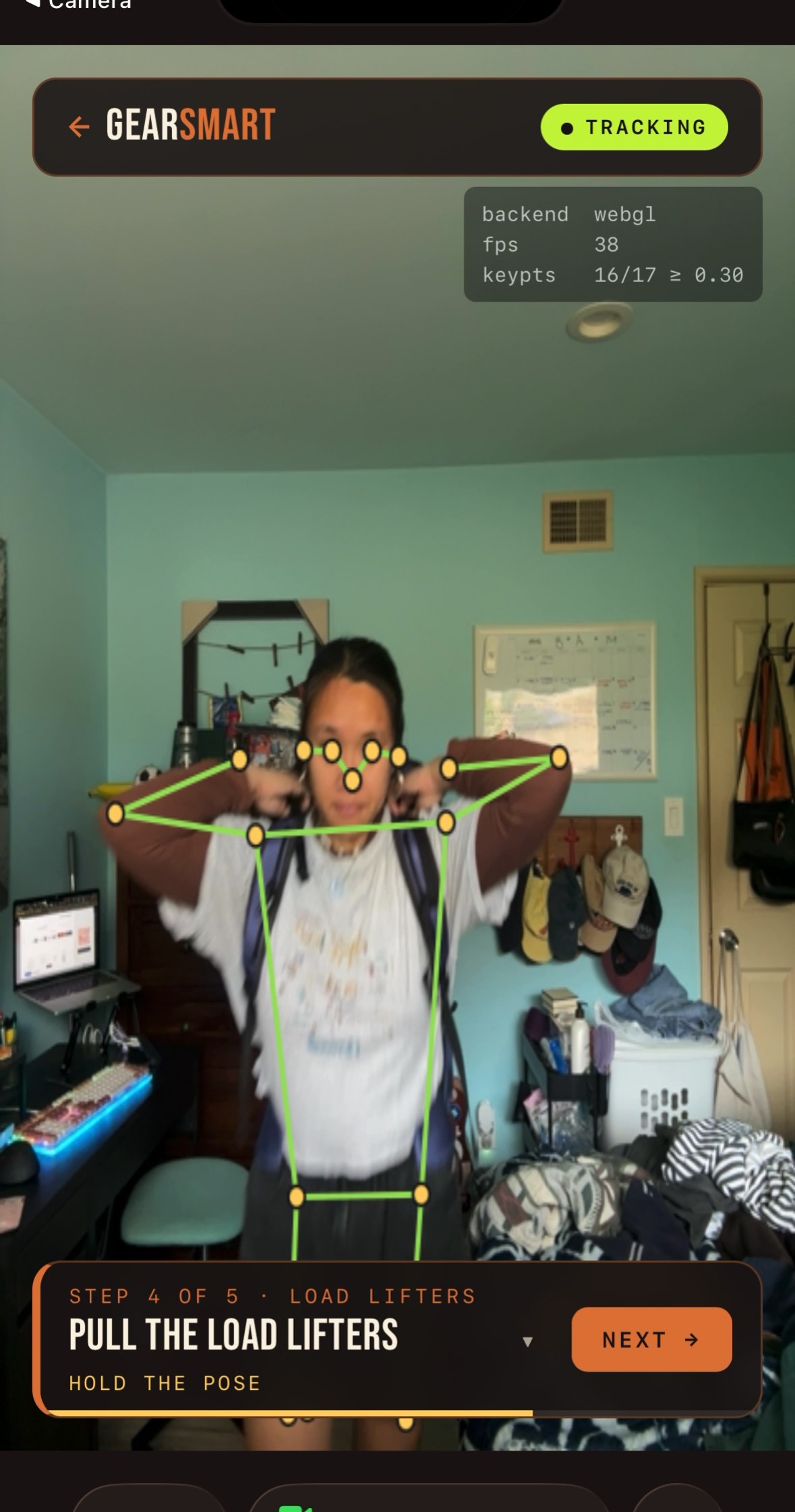
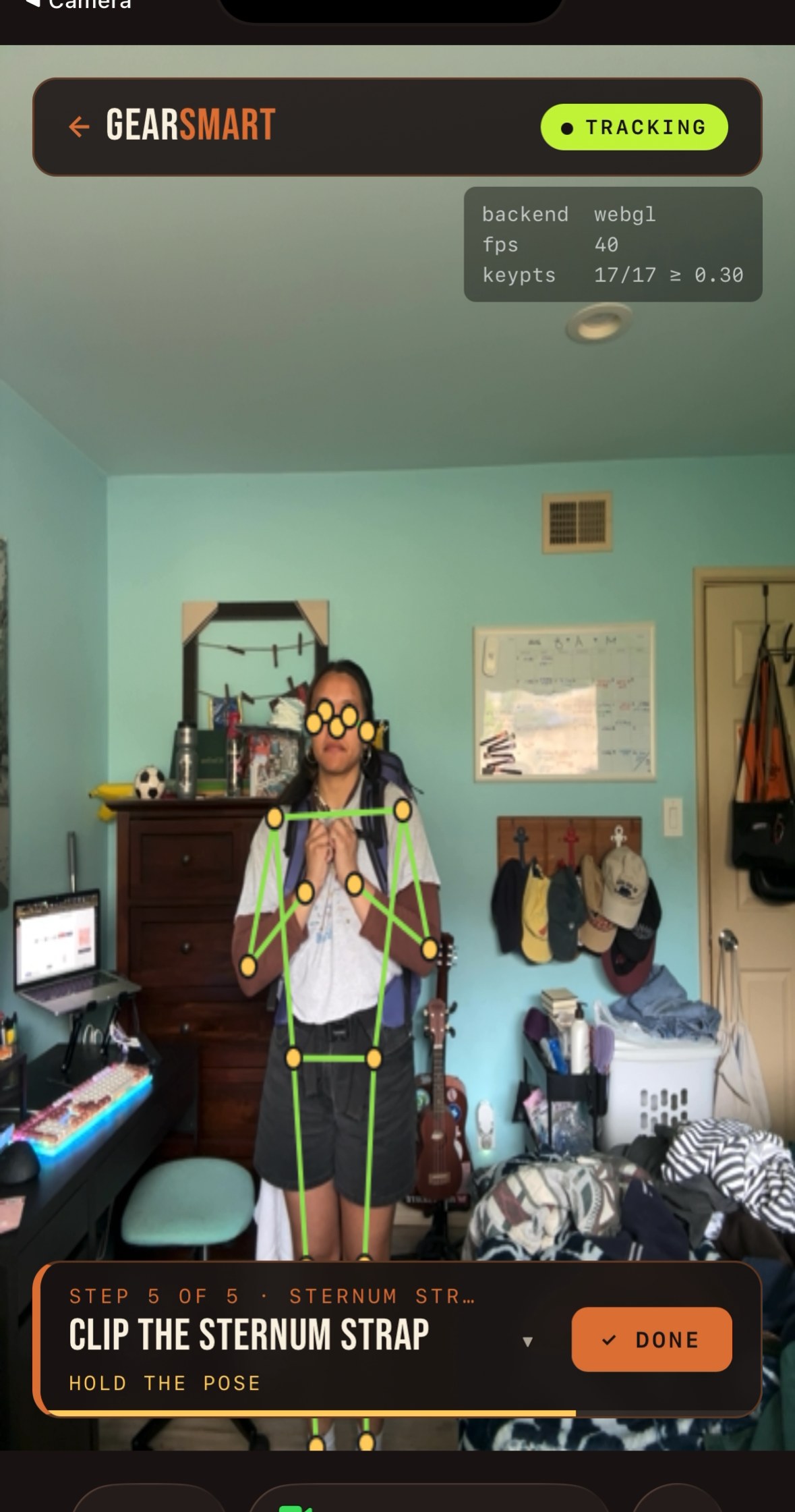
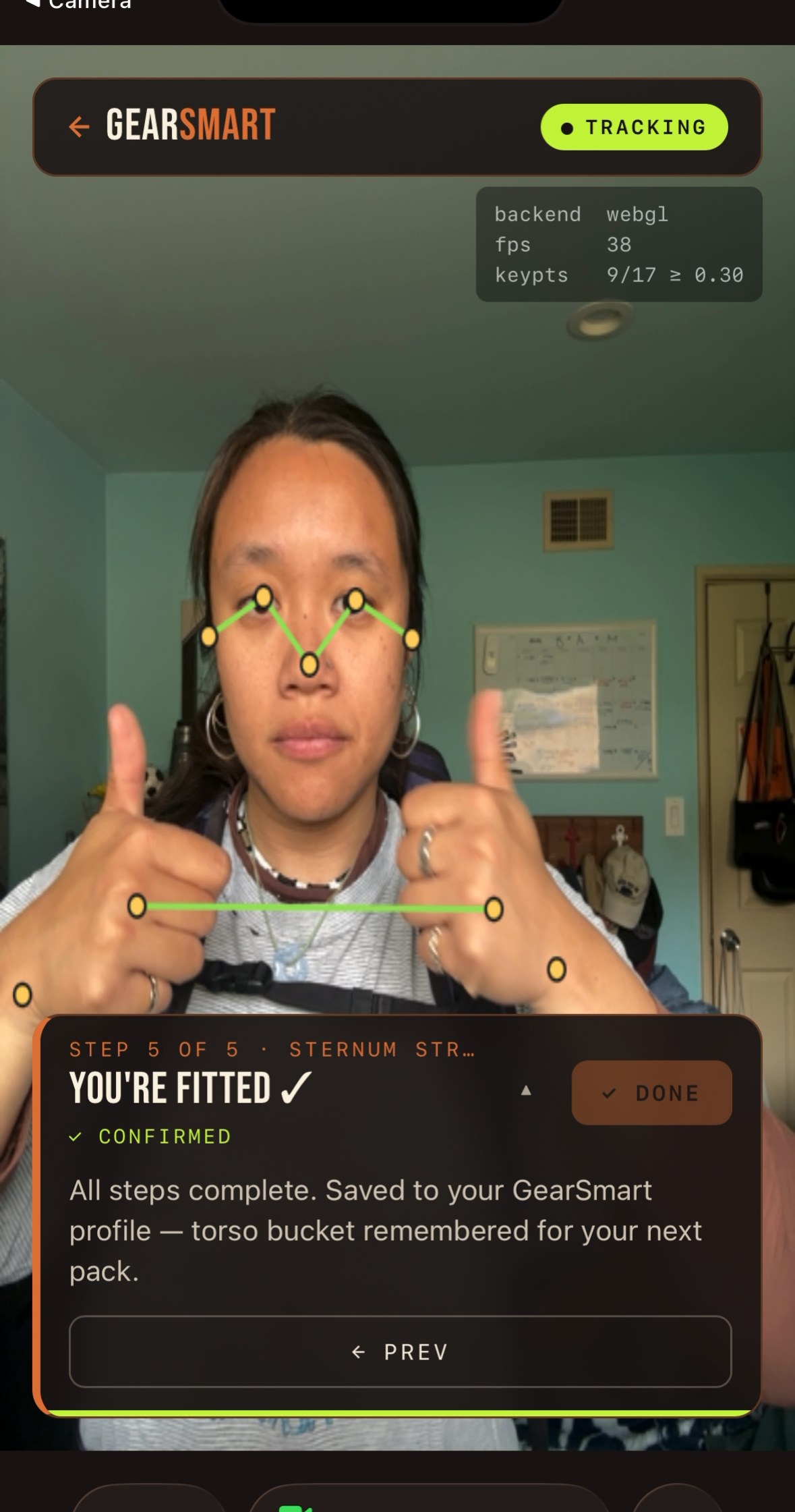
The AR Fit Guide reads 17 body keypoints live, in-browser, and coaches you through five fitting steps — then confirms the fit and remembers your torso size for next time.
What I Designed vs. What AI Built
AI built the prototype fast — that's the point; it let me test ideas in days, not weeks. What's mine is the thinking. The problem came from the REI floor and my own first trip, validated against real beginners before I built anything. The structure — every item carrying a why, tied to the actual forecast for your destination and dates — was a schema I designed and iterated across four versions. The biggest call was the retailer-agnostic pivot after REI's rejection — judgment AI doesn't hand you. And I tested with a real climbing community, not classmates, and changed the product based on what they did. The tool is the artifact; the judgment is the design.
Validation
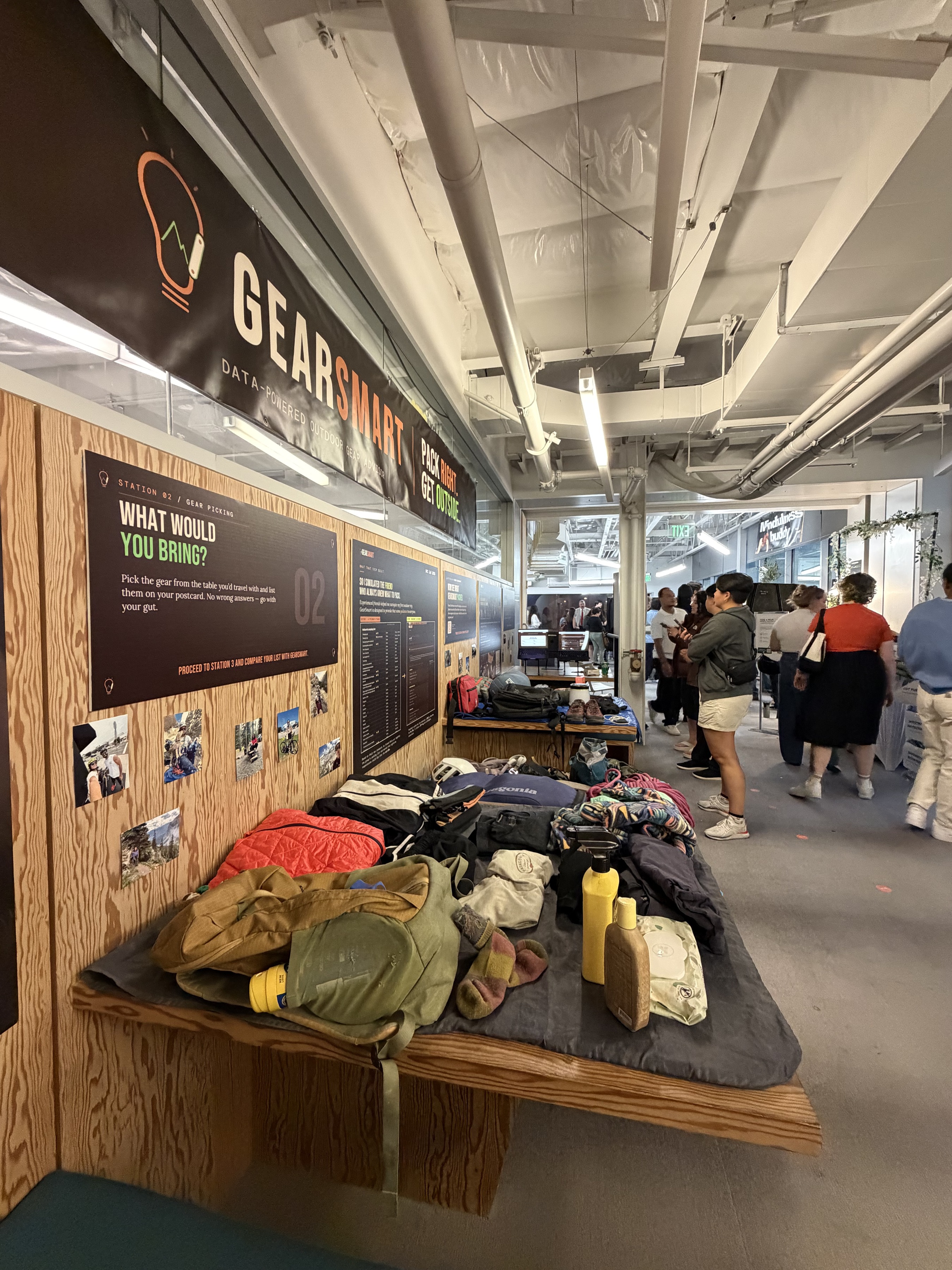
Tested with beginner climbers (LCC + remote), reviewed by a panel of working designers — including a senior product designer at Patagonia and a designer on Adobe's design-system team — and exhibited publicly through a four-table experience where visitors compared their own packing guess against a researched list: the gap between guessing and knowing, made physical.
“It's genius that you started pulling the API from weather and from the vendors to bring everything into one shop.
”
Sam Anvari
Advisor
“Like a knowledgeable, generous friend.
”
Beginner tester
Ladies Climbing Coalition
Reflection
GearSmart taught me what AI is good for as a design material: speed. But the defensible work is the judgment underneath — framing the real problem, designing the reasoning structure, the retailer-agnostic pivot, and testing with real beginners instead of classmates. The tool is the artifact. The judgment is the design.
What's next
A Patagonia product designer on my capstone panel gave me three ideas I want to build next.
- Pack weight. Show a running total as you check items off. Weight decides what kind of pack you need, from a light shoulder-carry to a full hip-belt pack with load lifters.
- A post-trip check-in. After the trip, mark what you actually used. The next list for a similar trip gets smarter, and so do you.
- Lending. A Worn Wear-style option to borrow gear from people nearby, so a first trip doesn't start with a big bill.