
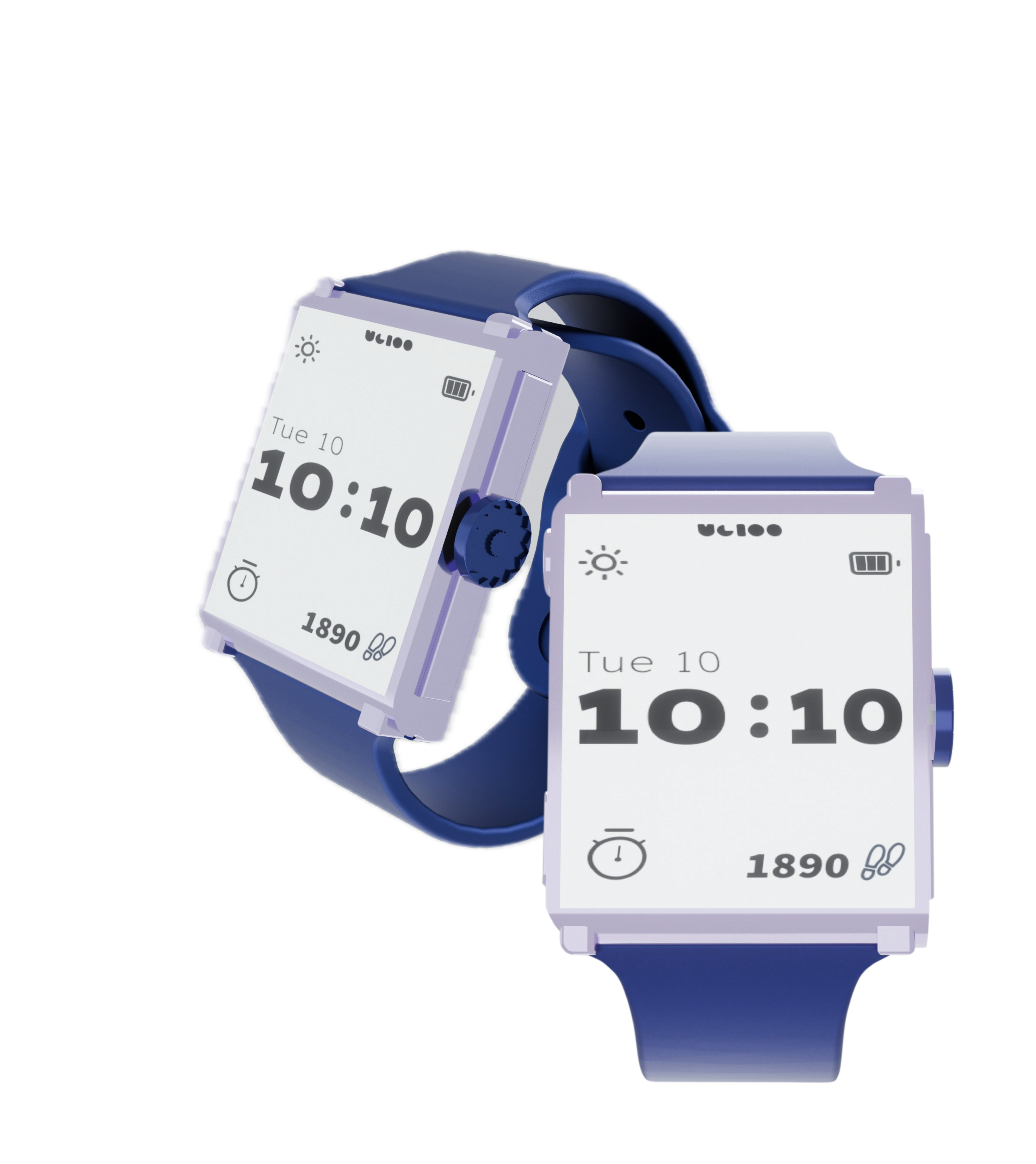
UGLOO
A Wearable Ecosystem for Emotional Regulation and Caregiver Insight
Year
2025
Duration
8 weeks
Role
Marketing/Brand Lead · UX/UI Design · UX Research
Team
Harmony Simpson, Yooji Chae, Joan Nandawula, Alexander Albao
Brief
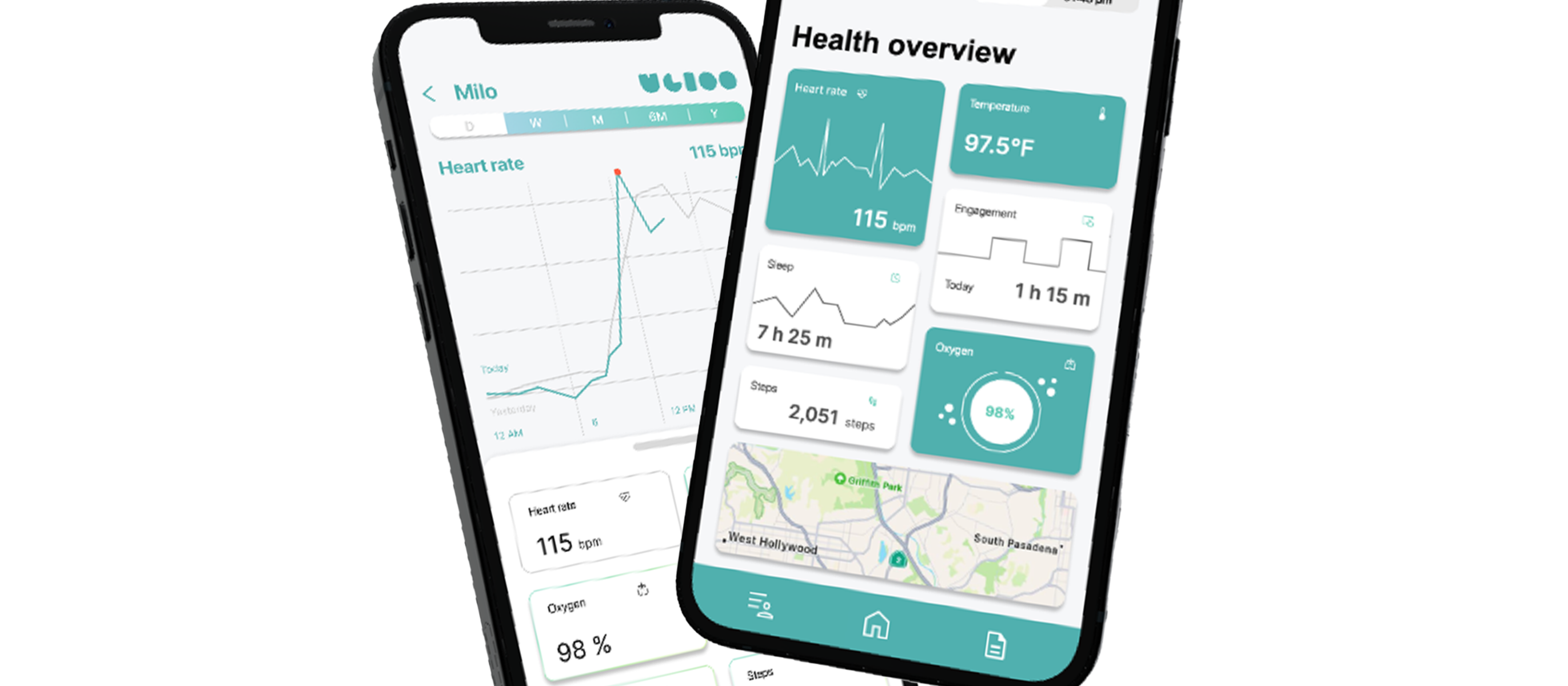
The development of our wearable and app is aimed at providing inclusive tools that empower neurodivergent children, particularly those with Level 1 Autism. For this project, I worked with a team of four to design an ecosystem that helps these children understand, express, and advocate for their emotional and sensory needs in real time.
Role: Marketing/Brand Lead, UX/UI Design, UX Research
Year: Academic Project, Spring 2025
Length: 8 weeks
Project Team: Harmony Simpson, Yooji Chae, Joan Nandawula, Alexander Albao
Problem
Behavioral Intervention Plans (BIPs) are widespread in schools, but are often built on outdated paradigms. BIPs prioritize adult oversight and reactive behavior correction over proactive child engagement. These systems fall short for neurodivergent children who often overlook early signs of distress, resulting in missed windows for early intervention and rising emotional costs.
This disconnect leads to:
- Increased masking, emotional burnout, and misinterpreted behaviors
- Missed or delayed intervention windows during early signs of distress
- Fragmented emotional, behavioral, and clinical data across home, school, and therapy settings
- Limited caregiver insight into a child's everyday emotional experiences and needs
With nearly 1 in 7 U.S. students having a learning or regulation difference, and 12% of them on the autism spectrum, the need for better systems is clear. Traditional tools, like Applied Behavior Analysis (ABA) or Individualized Education Programs (IEPs), are often inconsistently applied, or focused more on fixing behavior than fostering internal resilience.
Key Insight
We address this gap by creating tools that are:
- Developmentally appropriate: designed for children's real needs, not adult convenience
- Socially safe: empowering children to express and manage their needs without stigma
- Scientifically grounded: leveraging cognitive science and embodied cognition
- System-integrated: allowing caregivers to track trends, respond early, and coordinate support
Research
TODO: Describe your research methods. What did you do — surveys, literature review, competitive analysis?
Lorem ipsum dolor sit amet, consectetur adipiscing elit. Our team conducted a mixed-methods research phase over two weeks, including secondary research, competitive analysis of existing wearable and AAC tools, and primary qualitative interviews.
Interviews
TODO: Summarize interview findings. Who did you talk to? What did you learn?
We conducted TODO: N interviews with caregivers, educators, and occupational therapists.
“TODO: Insert interview quote here.
”
TODO: Name
Parent of autistic child
“TODO: Insert interview quote here.
”
TODO: Name
Occupational Therapist
“TODO: Insert interview quote here.
”
TODO: Name
Special Education Teacher
Insights
We address this gap by creating tools that are:
- Developmentally appropriate: designed for children's real needs, not adult convenience
- Socially safe: empowering children to express and manage their needs without stigma
- Scientifically grounded: leveraging cognitive science and embodied cognition
- System-integrated: allowing caregivers to track trends, respond early, and coordinate support
Personas
TODO: Introduce 2–3 personas developed from research.
TODO: Child Persona Name
Age 8, Autistic
TODO: Brief persona description. What are their needs, frustrations, and goals related to emotional regulation?
TODO: Caregiver Persona Name
Parent / Primary Caregiver
TODO: Brief persona description. What challenges do they face in understanding their child's emotional state?
TODO: Educator Persona Name
Special Education Teacher
TODO: Brief persona description. What do they need from a tool like UGLOO in a classroom setting?
Precedents
TODO: Describe competitive analysis / precedent research. What existing products did you look at? What did you learn from them?
Before
After
Existing Tools
TODO: Describe what current AAC devices, sensory tools, or wearables do well.
Gaps Identified
TODO: Describe what is missing — real-time data, caregiver visibility, age-appropriate design, etc.
Solution
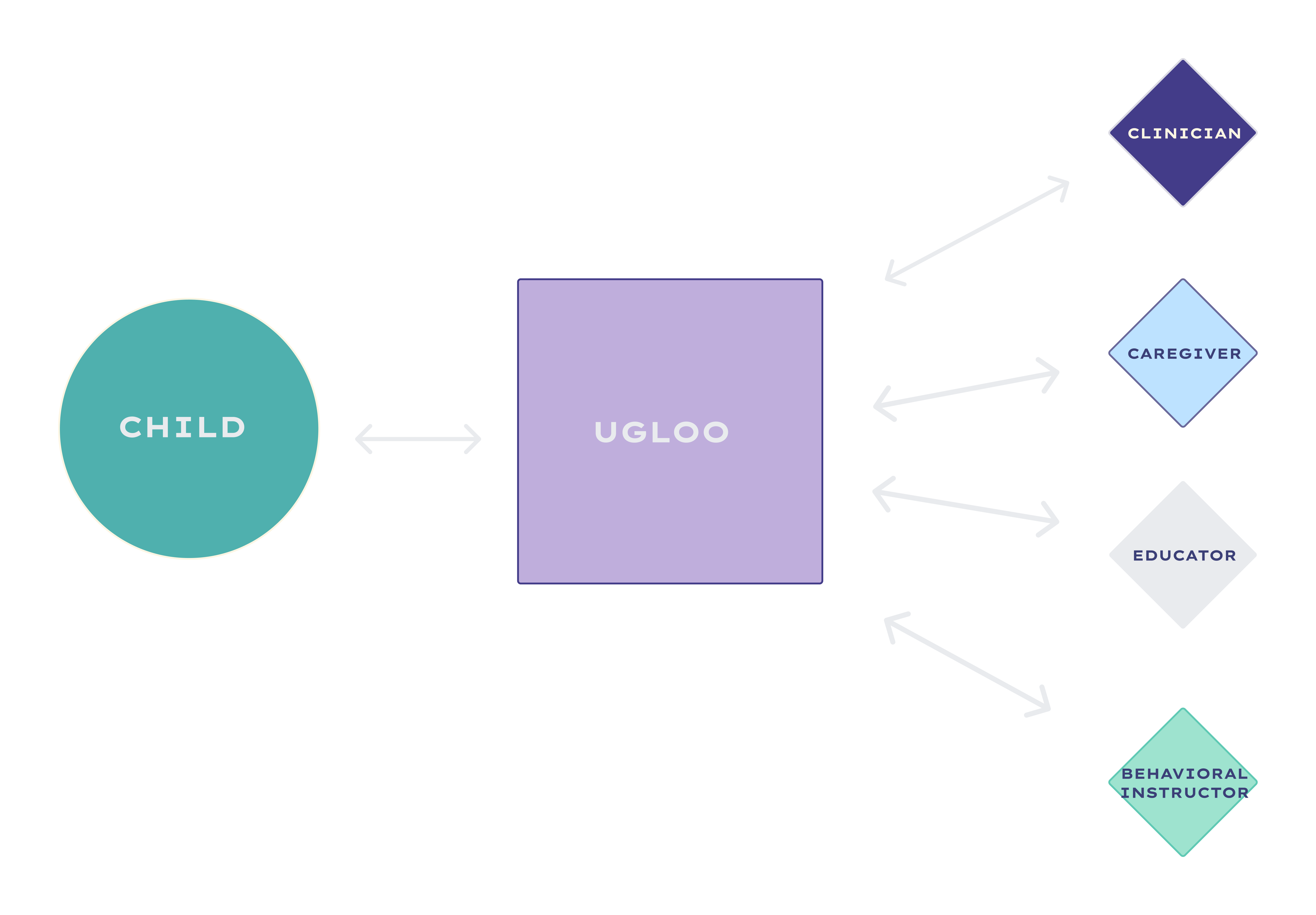
By starting from the child's internal cues rather than external disruptions, UGLOO shifts the balance from managing meltdowns to building emotional fluency and independence. UGLOO transforms invisible struggles into visible insights, bridging the gap between the child and their support team in real time.
Sketches
TODO: Show early sketches and ideation. What concepts were explored before converging on the final direction?
Lorem ipsum dolor sit amet, consectetur adipiscing elit. Our team ran a design studio workshop to generate a wide range of concepts before converging.

Storyboard
TODO: Walk through the user journey via a storyboard. Show a scenario of a child using UGLOO during a difficult moment.


Prototypes
TODO: Describe the prototyping process. What fidelity levels did you build? What did you test?
Lorem ipsum dolor sit amet, consectetur adipiscing elit. We built two rounds of prototypes — a low-fidelity paper prototype for initial usability testing, followed by a high-fidelity Figma prototype for the caregiver app and a Fusion 360 model for the wearable form factor.

Wireframes
TODO: Show key wireframe screens. Describe the decisions made during wireframing.

Features
TODO: List and describe the key features of the UGLOO system.
- Biometric Sensing: TODO — describe what biometric data the wearable captures (heart rate, skin conductance, etc.)
- Emotional Check-in: TODO — describe the child-facing check-in interface on the wearable
- Caregiver Dashboard: TODO — describe what caregivers see in the companion app
- Incident Log: TODO — describe how incidents are recorded and reviewed
- Customizable Alerts: TODO — describe how caregivers can set thresholds and notification preferences
Final UI — Homescreen
TODO: Show and describe the final homescreen design for the caregiver companion app.

Final UI — Biometric Data
TODO: Show and describe the biometric data view — how is real-time and historical data surfaced?

Final UI — Incident Log
TODO: Show and describe the incident log screen — how are past events recorded and navigated?

Future Considerations
TODO: What would you explore with more time? What are the limitations of the current design?
- TODO: Consideration 1 — e.g., clinical validation of biometric thresholds
- TODO: Consideration 2 — e.g., expanding to other neurodivergent conditions
- TODO: Consideration 3 — e.g., school/multi-caregiver account support
- TODO: Consideration 4 — e.g., hardware manufacturing and durability for child use